40 Years In, the Heart of OKC’s Greek Fest Hasn’t Changed
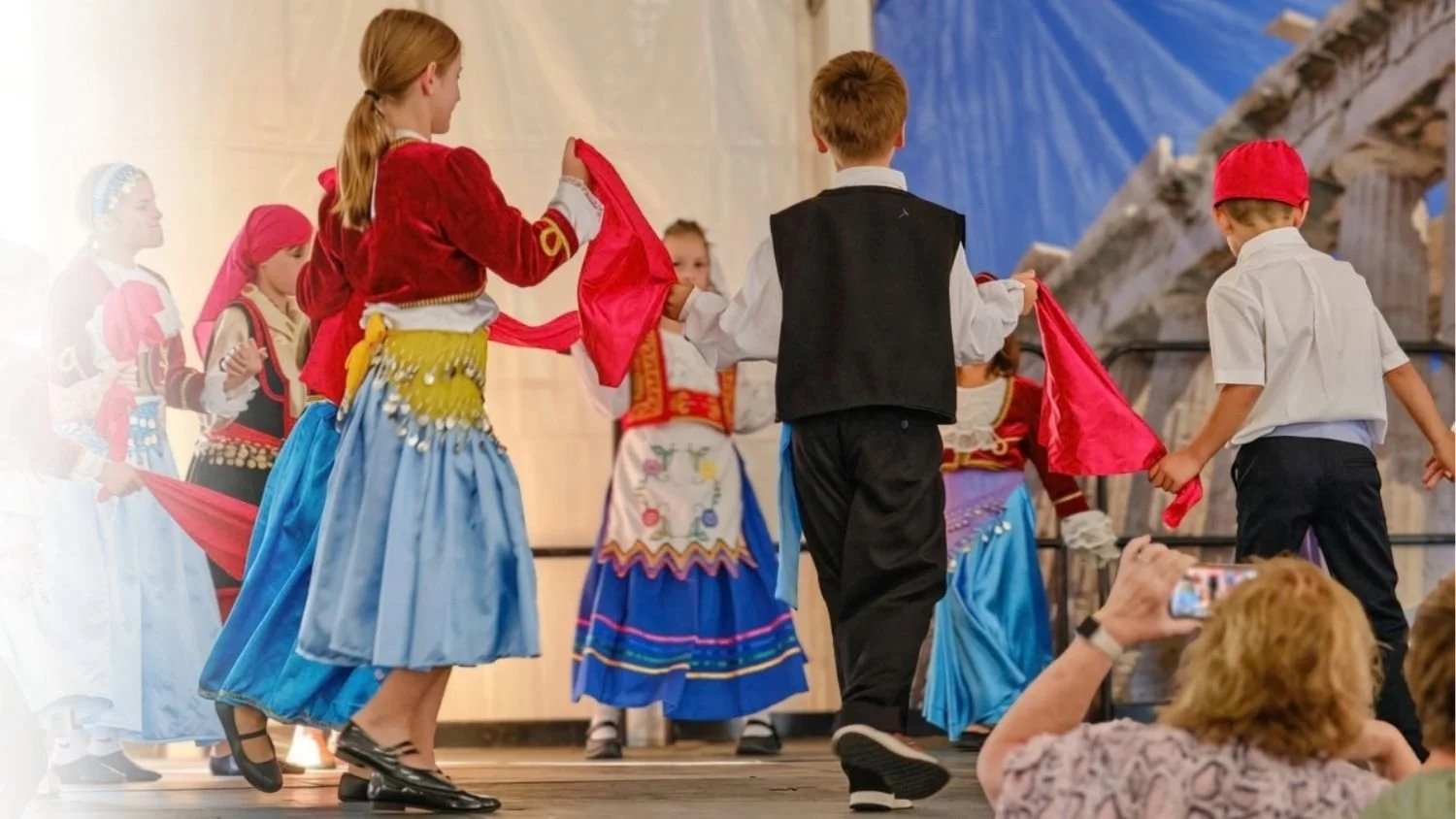
Children’s Dance Group: The Opa Dancers
In November 2006, when I was a journalism student at OU, I wrote a feature about the OKC Greek Festival. I forgot about it, and honestly don’t remember whether it was published or shared anywhere. Discovering and reading it twenty years later is a strange experience, especially as we’re about to celebrate our 40th festival. But, we’re posting it here now because it’s mostly still accurate.
Here’s the story, exactly as written in 2006.
Posted unchanged, in memory of the dozens who worked tirelessly to bring OKC’s Greek Festival to life and are no longer with us, including those I interviewed or are mentioned below: Nick and Darlene Pagonis, and Tony Chiconas. May their memories be eternal.
OKC Greek Tradition
A small white church, distinguishable by its big dome and stained glass windows, is crammed between a large Methodist church and an apartment complex.
While the outside is unique, people don’t see it. They’re too busy heading to Quail Springs Mall just down the street, stopping at the Shell Gas Station on the corner for their Powerball tickets, heading to McDonald’s to play Monopoly or going to dinner at one of the many franchise restaurants that are lined up on the way to the mall.
But in October, for at least three days, the little white church on Pennsylvania Avenue is brighter, more exuberant, and much more exciting than having a 1 in 146,107,962 chance of winning the Powerball.
Every year for the last 22 years, St. George Greek Orthodox Church in Oklahoma City puts on a Greek Festival that finally lets the church get noticed.
St. George’s Greek Festival is many things. It is important not only because the church needs the money it makes to survive, or that it teaches the community about the Greek culture, it is important because it unites a church of young and old members.
”The festival usually brings in 10,000 to 12,000 people, but on a good year we’ve approached 15,000,” said St. George’s priest Father John Tsaras.
These numbers may seem insignificant, considering Bob Stoops and the Sooners bring in 84,000 people every Saturday, but this church has no more than 140 families. And only 40 percent of them help to prepare for the festival, said Nick Pagonis, who has been helping with the festival since its first year.
“I’ve emceed all but one festival, so 21,” Nick said. “The first year I was strictly a dancer, and I’ve done both dancing and emceeing for 18 or 19 years.”
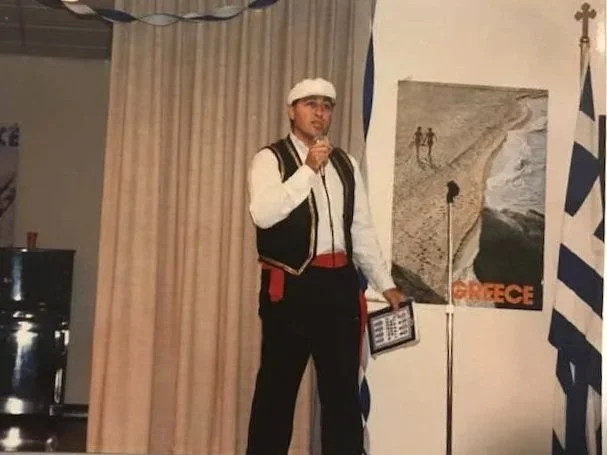
NIck Pagonis emceeing the 5th Annual OKC Greek Festival in 1988
Of those who help with the festival, most have stories the same as Nick’s. Everyone has a role in the festival, but at the same time everyone has to be able to help wherever is needed. Whether it is helping at one of the many a la carte food booths, or dancing to provide entertainment, no one has only one job.
Matthew Akins, 16, works at both the Zorba Sundae booth and has danced in the festival for 10 years. “It’s cool because I get to dance, then I get to go to the booth and talk to my friends,” Matthew said.
The festival is also a family affair. Matthew’s mom is the dance instructor for the children and his dad works in the kitchen. Nick’s wife, Darlene, helps to make kourabiedes (Greek cookies) and works in the booths, and the priest’s wife is the teenage dance instructor.
Margo Chiconas works in the gyro booth exclusively now. But she danced in the first annual Greek Festival. And she helped where she was needed, like in the saganaki (flaming cheese) booth. Her daughters dance and have worked at the sundae booth. Her husband works in the gyro booth, and some years even her brother-in-law, his wife and their daughters come from Tulsa to help wherever is needed.
Since such a small group of people put on such a huge festival, the planning must begin early. “Planning is about six months,” said Mike Komis, the adult group dance instructor. “Then we do a lot of ordering and cooking.”
The cooking usually begins in late August. “We make the breads first and freeze them,” Nick said. “The pastries are last, usually in the last two weeks [before the festival].”
Traditional Greek dance practice starts about two months before the festival, Matthew said.
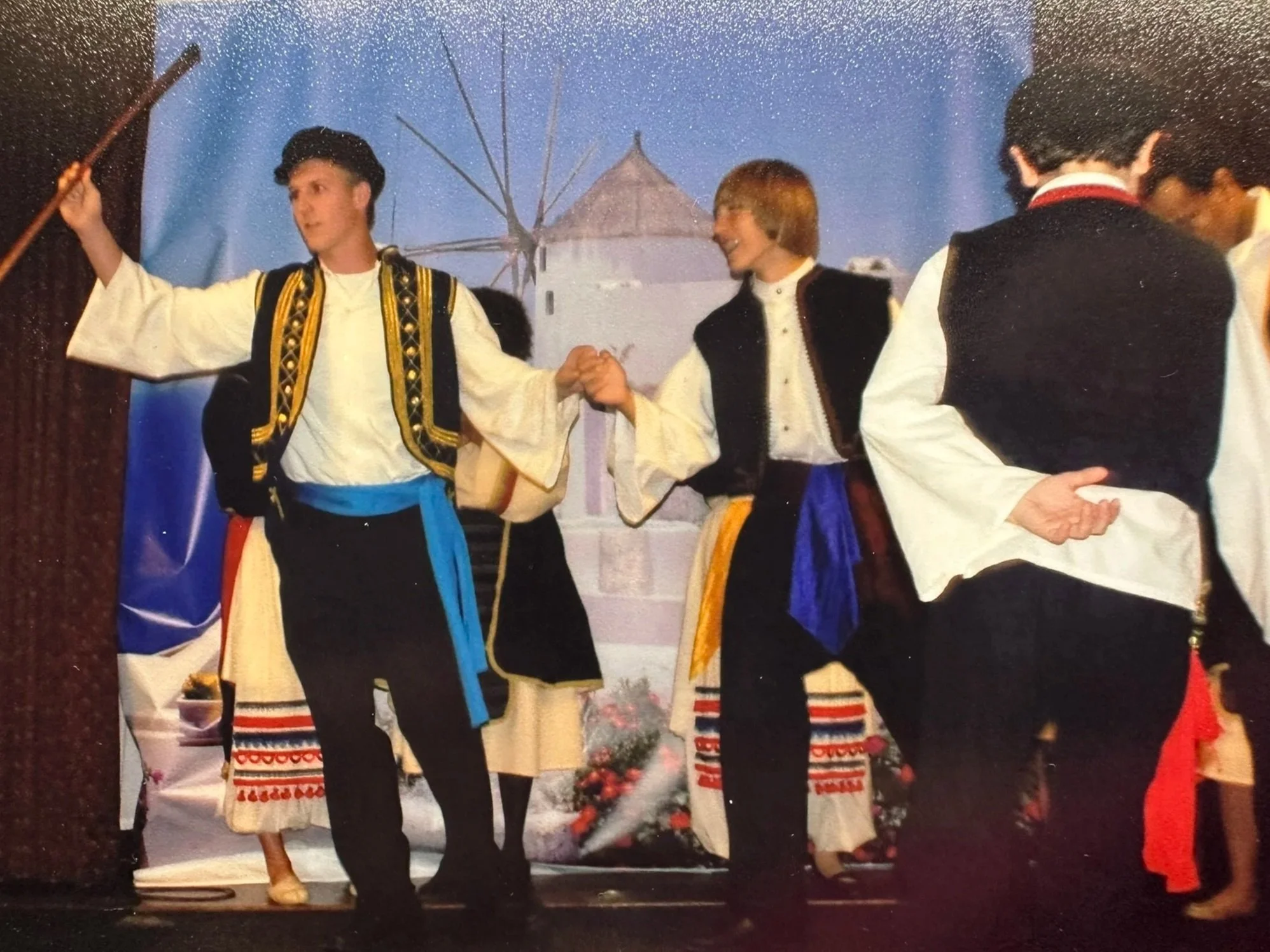
Matthew (left) and Michael Akins dancing with the teenage group in 2006
If the Greek Festival is so much work, then why does St. George continue to have it?
“First for economical reasons, and second to teach [the community] about our culture, our food, language and religion,” said Presbytera Vicky Tsaras, the priest’s wife. “It is also important for people in the church to learn those things.”
But maybe the most important aspect of the Greek Festival is that it lets the St. George parishioners, especially those who have emigrated from Greece, to share their different customs with each other and others.
“We’re very proud of our heritage, and we want to let people enjoy our culture and we want to share with Oklahomans, just as any other cultures do, “ Nick said. “Whether we make money or not, we want to get out the word out about our culture.”
The preparations bring the church together, Nick also said. “Working side by side, you get to know each other,” he said. “During the year we drift apart, the festival brings us together. ”
Perhaps this unity is what makes the Oklahoma City Greek Festival better than others. Presvytera Vicky said she has been to the Greek Festival in Salt Lake City, which has two large churches and one festival. “Salt Lake City’s is much bigger, but I think ours is better. It is more warm here, and it reaches more to the people who come,” Presvytera Vicky said.
So what is it like to help your church and the community while stuck in a hot tent surrounded by your family and friends, dancing and smelling like gyros for three days?
Matthew answered with a nod and a smirk. “It’s exhausting, but it’s worth it.”
Forty Years, and We'll See You in October
Sadly, Nick and Darlene Pagonis have passed. And so has Tony Chiconas, who I mentioned but didn’t name, only his job in relation to his wife: her husband works in the gyro booth. He did, for years. In more recent festivals you found him at the entrance instead, greeting every guest. The list of those who shaped the festival like these three and are no longer with us keeps growing, but their contributions remain.
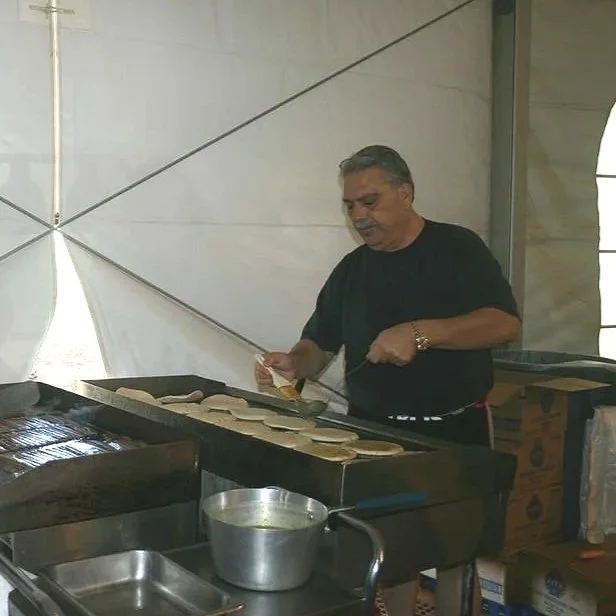
Tony Chiconas working the Gyro booth
Then there's everything that hasn't changed. It's the same building, finished in 1984, the same year as the first festival*. The pastries still come last, in the final two weeks. Fr. John is still our priest. Presvytera Vicky, Mike Komis and Margo Chiconas still work hard the whole weekend.
The evolution of our three Greek dance groups shows how much has changed. Margo's daughter Christine, one of the girls who danced and worked the sundae booth in the 2006 story, now leads the adult and children's groups. Matthew, the 16-year-old I interviewed whose mom (Christie) taught the children, works the bar with his family and still dances with the adults. His brother, Michael, teaches the teenagers, the group Presvytera Vicky taught in 2006.
Every dance group in 2026 is now led by someone who grew up dancing in the OKC Greek Festival.
This year, Matthew's daughter joins the children's group for the first time. Christine and I teach her, alongside my own 8-year-old and many more of the next generation of dancers.
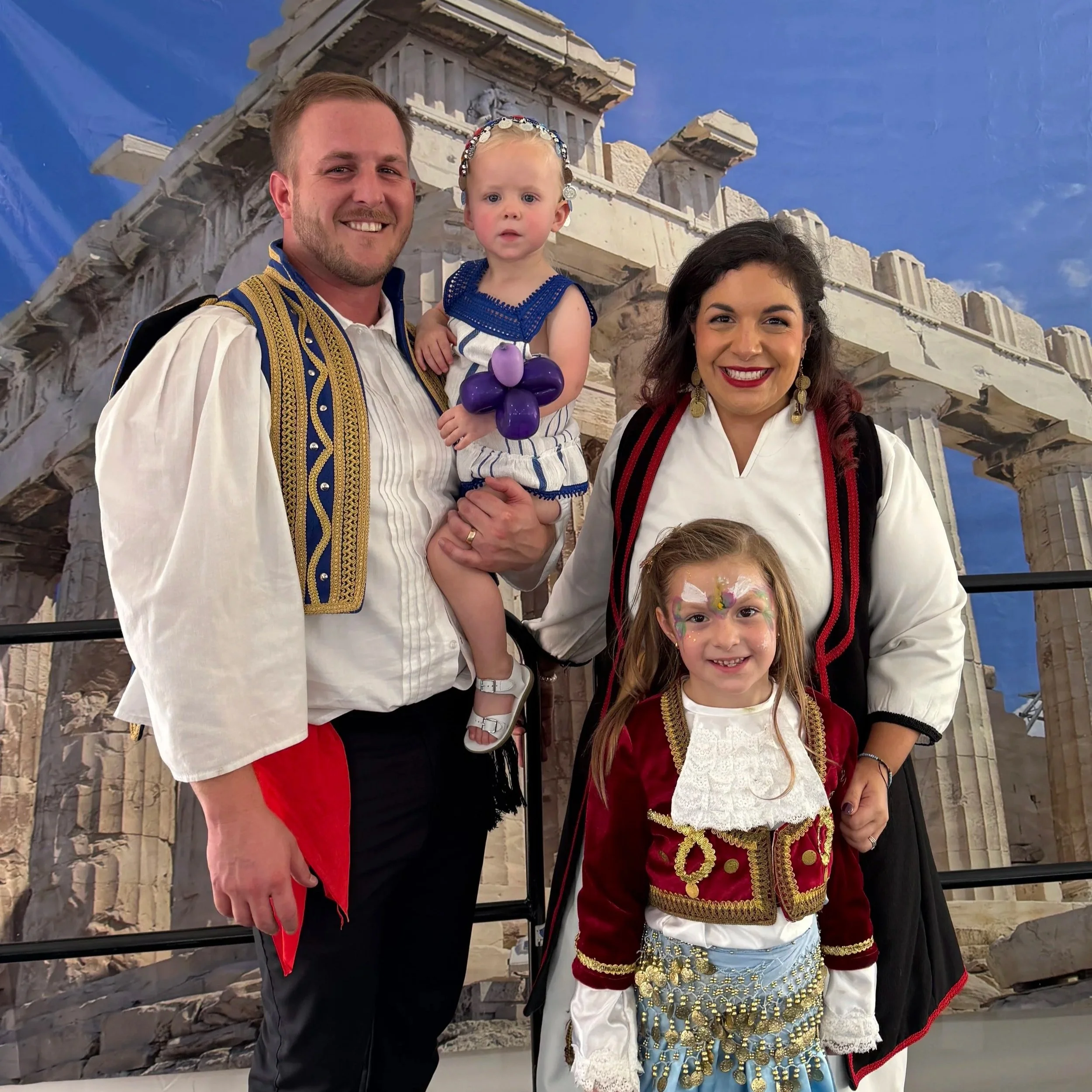
Matthew with his daughter and me with mine.
That's the whole thing, really. Nick was right. The festival brings us together every year, doing the same work, with a few more people every time. The purpose stays the same: We want Oklahoma City to experience Greek culture: to eat our food, hear our music, walk through our church, and leave knowing something about who we are.
Forty years in, it's still exhausting. It's absolutely worth it.
The 40th Oklahoma City Greek Festival is October 2, 3 and 4, 2026 at St. George Greek Orthodox Church, 2101 NW 145th Street.
*This is our 40th festival, though the first one was in 1984. We did not have a festival in 2020 or 2021 because of the Covid-19 pandemic.